
I’m learning that the hardest part of aging is figuring out how to say old-person things without sounding old. Just by dint of having children and having been alive for nearly four decades, I now regularly find myself saying stuff like “when I was your age” and “I remember when I.” I catch one of these middle-aged phrases coming out of my mouth and for a moment I can feel entropy gnawing away at my bones in real time.
The older kid, oblivious to my unfolding personal crisis, loves when I explain old things to him. Today, prompted by an unused jack in our kitchen, he listened to me talk for a solid 5 minutes about the strange past, when everyone had to plug their phones into the wall. We’ve had some version of this conversation multiple times over the past week, prompted by, variously, a print newspaper, FM radio, and a sick-ass El Camino we drove by.
This, as you’ve probably figured given that you’re here, is my new website. A few months ago, Glitch, the online coding community slash project host, announced that it would be shutting down, and taking my old blog with it. I still have access to those old posts, though I’m undecided on whether I’ll bring them back or not. In the meantime, I’ll treat this as a fresh start—something we get fewer and fewer of as our lives go on.
What I’m Into Right Now
Bouldering
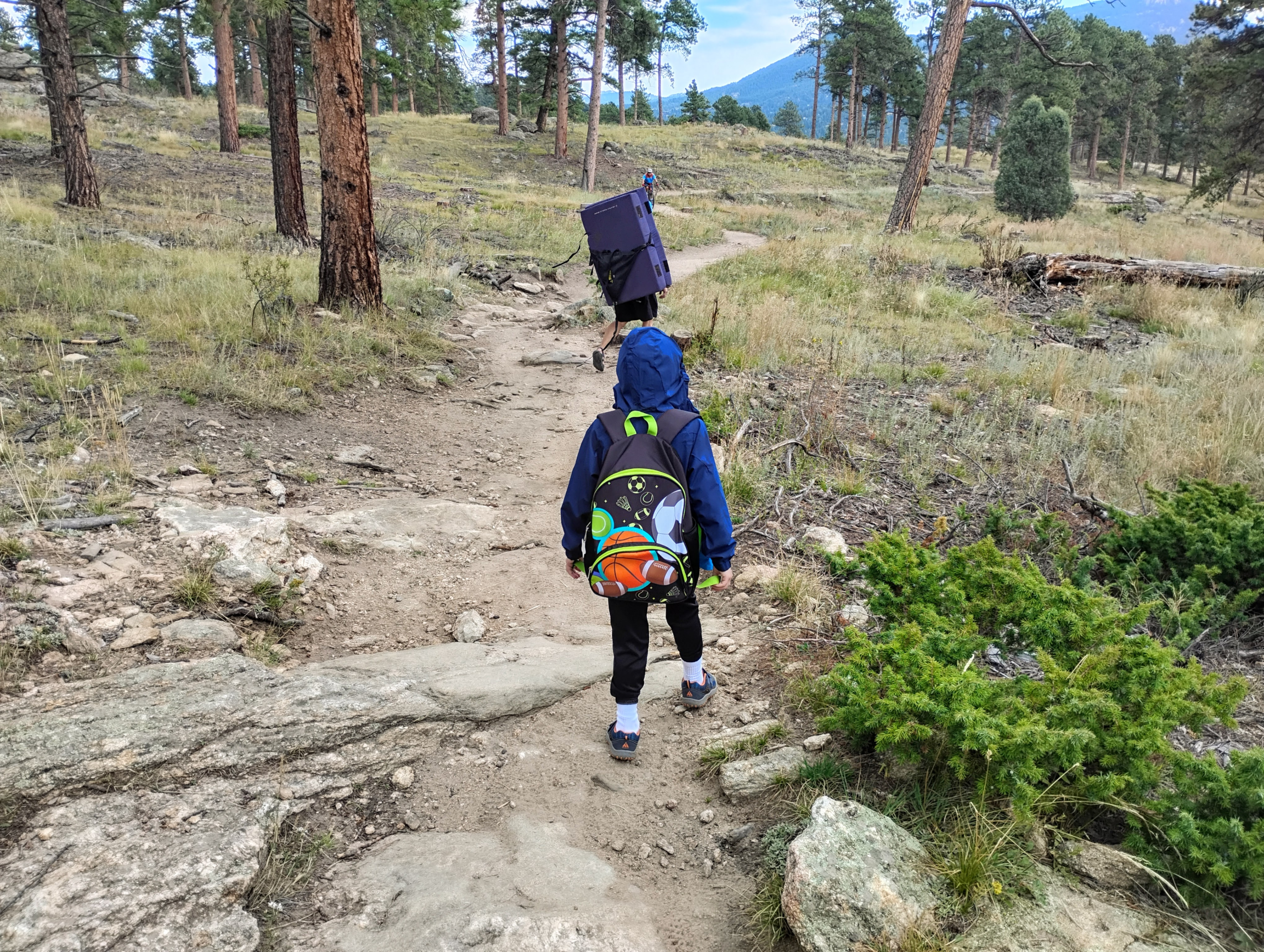
The first time I took my older son bouldering outside, at Rocky Mountain National Park’s Wild Basin, he immediately tore his shirt off. This is the kind of behavior I usually associate with 20-something dudes from Boulder, and here was my then-5-year-old, instinctively getting the guns out before he touched the proj. He just knew: it was like watching like a sea turtle hatchling clambering into the surf.
We’ve managed to get out more lately — Alderfer / Three Sisters Park for you locals, which tends to be my default —and it’s been a mix of satisfying and humbling. Satisfying because, somehow, our regular sessions on the garage wall have kept me enough in fighting shape that I don’t climb as badly as I could; humbling because I’m still climbing worse than I’d like to. With paddling season wrapping up, I’m hoping that I’ll have enough time between backpacking trips and family vacations this fall to shake off the rust and get good at climbing real rock again.
Timeless by Goldie
I’m in the middle of a now monthslong jungle kick, much to the chagrin of my wife, my hiking partners, and anyone else who’s had to spend more than an hour at a time in the car with me. I’ve been trying basically every corner of the genre, from its raw beginnings in breakbeat hardcore to the ambient drum and bass playlists YouTubers build out of PS2 samples today.
After all that, Goldie’s Timeless is the album I keep returning by. Dubbing your debut LP that is a bold move, but in my humble opinion, Clifford Joseph Price, OBE, called his shot back in 1995. With Timeless, he found an inflection point that’s since become load-bearing, mixing the driving jungle of the early 90s with the vocal samples and smooth synthesizers of modern liquid funk in a way that no one’s equaled since. Check out the live rendition of A Sense of Rage and some other prime cuts from the album below.
His Bloody Project by Graeme Macrae Burnet
In 1869, Roderick “Roddy” Macrae committed a gruesome triple murder in the remote Scottish village of Culduie. His Bloody Project purports to be the historical record of those killings, assembled from Macrae’s own jail memoirs as well as witness statements, character references, and other documents pulled from deep in a library’s archives. I haven’t yet finished Macrae Burnet’s—no relation to his fictional protagonist—Booker Prize-longlisted novel, but so far, I’ve enjoyed the claustrophobic and off-kilter account. Roddy seems like an unreliable narrator, less because of any intentional obfuscation and more because of his occasional naivete and strange way of viewing the world. I’m looking forward to seeing what he left out.
Work Highlight
Unreachable public lands continue to be an issue across the American West, where wealthy landowners have successfully cut off entry to large swathes of BLM and USFS holdings, effectively giving them sole access to what should by rights be public property. American Prairie is among the groups that have fought back: Last month, the nonprofit announced it had finalized a deal to buy out Montana’s Anchor Ranch. Besides bringing more than 60,000 acres of private and leased land back into the public sphere, the acquisition included the only practical access to a 50,000-acre tract of BLM land beloved by elk hunters and campers.